First, I have to share that none of the blogs I write and publish were created or edited by Chat GPT. I have nothing against those who use it, it’s just that I want to write about my own research and thoughts, not something created by AI. I don’t like to take shortcuts. That said, in this session’s blog I want to write about an important facet of our human history, what I call psychological alchemy—storytelling.
Our lessons from earliest childhood often come from storytellers, though we seldom realize it. We are told fairytales as children, then read storybooks, see stories on TV and movies, and even in social media. We do not pay much attention to them, but they resonate in us on subconscious levels. We may ignore them, thinking they have no effect on us, but we are wrong.
We humans have been hearing and telling stories long before we could convey them in writing; we carved pictorial stories on cave walls 25,000 years ago. Through time, as generations grew and migrated to other areas throughout the world, we used symbols to communicate and evolved languages and stories to communicate. All over the world we humans shared stories and, despite separation by huge distances and oceans, were strikingly similar. Legends evolved from those stories, recurrent themes throughout, such as, a hero who goes through struggles and prevails, of a princess rescued by the good knight, of an evil king destroyed by a hero. They became representative of what became characterized as “archetypes,” recurrent symbols or motifs in literature, art, or mythology (Wikipedia, 2015).
So, what about archetypes and why should we pay attention to them?
It’s pretty interesting that there seems to be so much similarity in the symbols and stories found over vast stretches of time and locale. Psychologists, like Carl Jung, began aggregating similar storylines and repetitive patterns, pointing out recurrent themes. A few are recognizable, such as Joseph Campbell’s archetype of ‘the Hero’s Journey,’ it was the story of the wanderer who becomes a warrior fighting battles for right and coming home’ from the ‘battles’ as ‘the hero.’ Other archetypes that have been identified were:
-The child archetype who loses innocence and gains maturity, like
–Alice in Wonderland, or has gone from rags to riches, or Dorothy in The Wizard of Oz.
-The Orphan, the child orphan who shows her/his survival skills and perseverance in difficult situations, such as Cinderella.
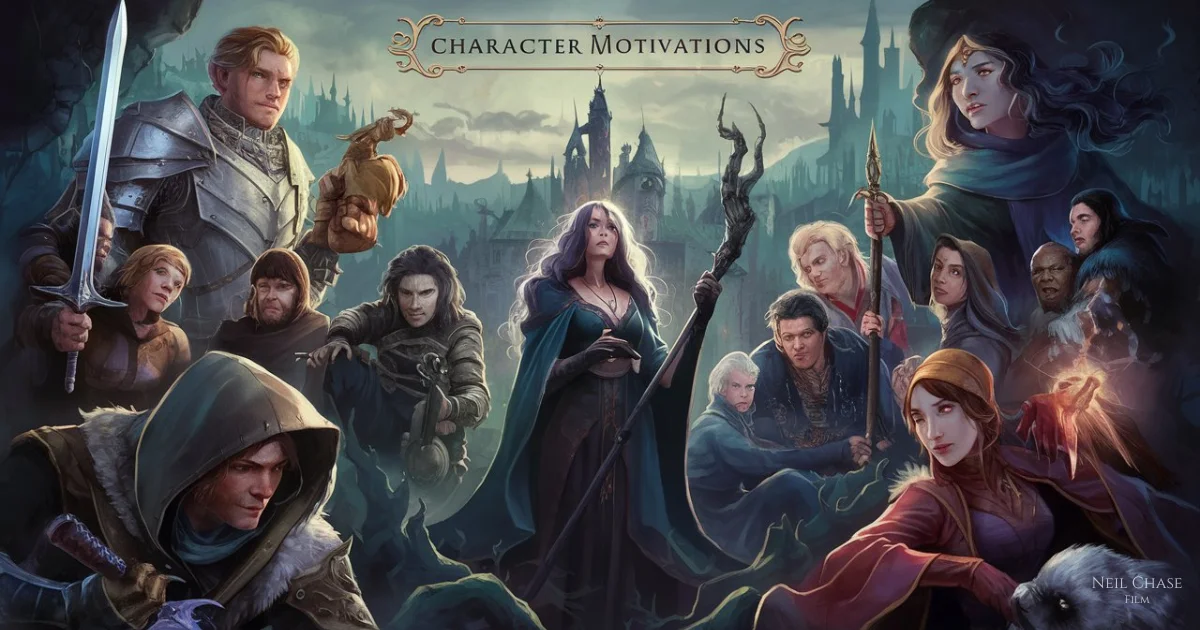
-The Mentor, the ancient one wo offers wisdom to the novice through trials. They can be family elders, wizards, or spirits who leave after their advice is given, like Gandalf in The Lord of the Rings or Yoda in Star Wars.
-The Savior, a derivation of the Hero, the person who sacrifices him- or her- self for the benefit of others.(This archetype has often been viewed as a version of the Hero, where the Savior goes on journeys, fights for believers, sacrifices his life for them , then rises to reign in peace).
We view and experience these archetypes daily, in our movies and TV shows, commercials, even in our sports! We root for the heroes and heroines, perhaps subconsciously hoping to emulate them, or at least, have similar happy outcomes.
Start taking more notice of what gets your attention. Why did you stop to notice that? No reason? Maybe. But if you notice it more than once, start paying a bit more attention to why it got noticed. It might be a commercial on TV or social media that stands out. Yes, maybe it’s just something on sale, but what if it just noted something that you’d noticed before? A good example might be a commercial for the University where a person sees a sign that says ‘11th Street’, then she sees a post offering $11.00 specials, later turns on TV to see a commercial offering $11,000.00 Master’s Degrees–and she has the ‘AHA’ moment of getting the degree! Perhaps, you’ve thought of taking a trip someday, you overhear someone talking about their trip to that place, or you go to a restaurant that reminds you of it too, then get a mail flyer offering discounts to that place. You might want to begin thinking about making some real plans to go to that place, even if it seems impossible right now. Yes, it might just be a ‘bucket list’ wish…but what if some part of you is seeking something, some missing piece, in you seems to resonate with that place?
While it may not seem to be worth notice to you, subconsciously you relate to similar type of archetypal story—and chances are you often approach life that way too. Psychologists would ascribe a certain personality type to you based on that observation, perhaps a personality test designation of a Type A, dominant, ‘get from point A to point B, leader, an ‘Analytical’, or an ‘Amiable’, it may well also describe how you approach life. Many of you have taken those kinds of tests for job interviews or other reasons, and the choices you make could often align with those designations. If tasked with choosing a favorite archetype story? Would it be the Hero? The Orphan, the Mentor, the Savior? Another story? And, looking at your choice, does it align with your personality and decision-making style? Or do you want it to? Could that archetypal choice tell you more about who you are right now or the future already there inside you revealing the ‘who you can become’?
If you pursue that curiosity you may find it leads to a dead end…but that’s the worst case. The better or best case is that you discover some things about yourself that surprise you! It may also point to some things you recognize as being important to you, little things, habits perhaps, that are part of who you are, like your love of gardening, of flowers, your appreciation of beauty, love of food or travel. These observations may not change your life, but they may reinforce your belief in who you are and your connections to even deeper essences of yourself, past and future. In truth, the desire to know about our ancestry ties directly back to the desire to know more about both the past and the future because it also tells us more about ourselves, and what makes us who we are today.
In the future we may talk a little more about tracing family ties (with or without companies, like Ancestry). What’s key here is why so many people want to trace their ancestral lines. The popular responses would be ‘to find famous ancestors,’ trace back countries of origin,’ maybe ‘track back long-lost relatives.’ But in the end, the signs’ point to it being all about the future—and you.