Last Blog I talked about ‘connecting the dots and the first one I talked about was archetypes and how they influence our lives. So, what are some of the other dots out there we can connect? And, if so, how can we connect them?
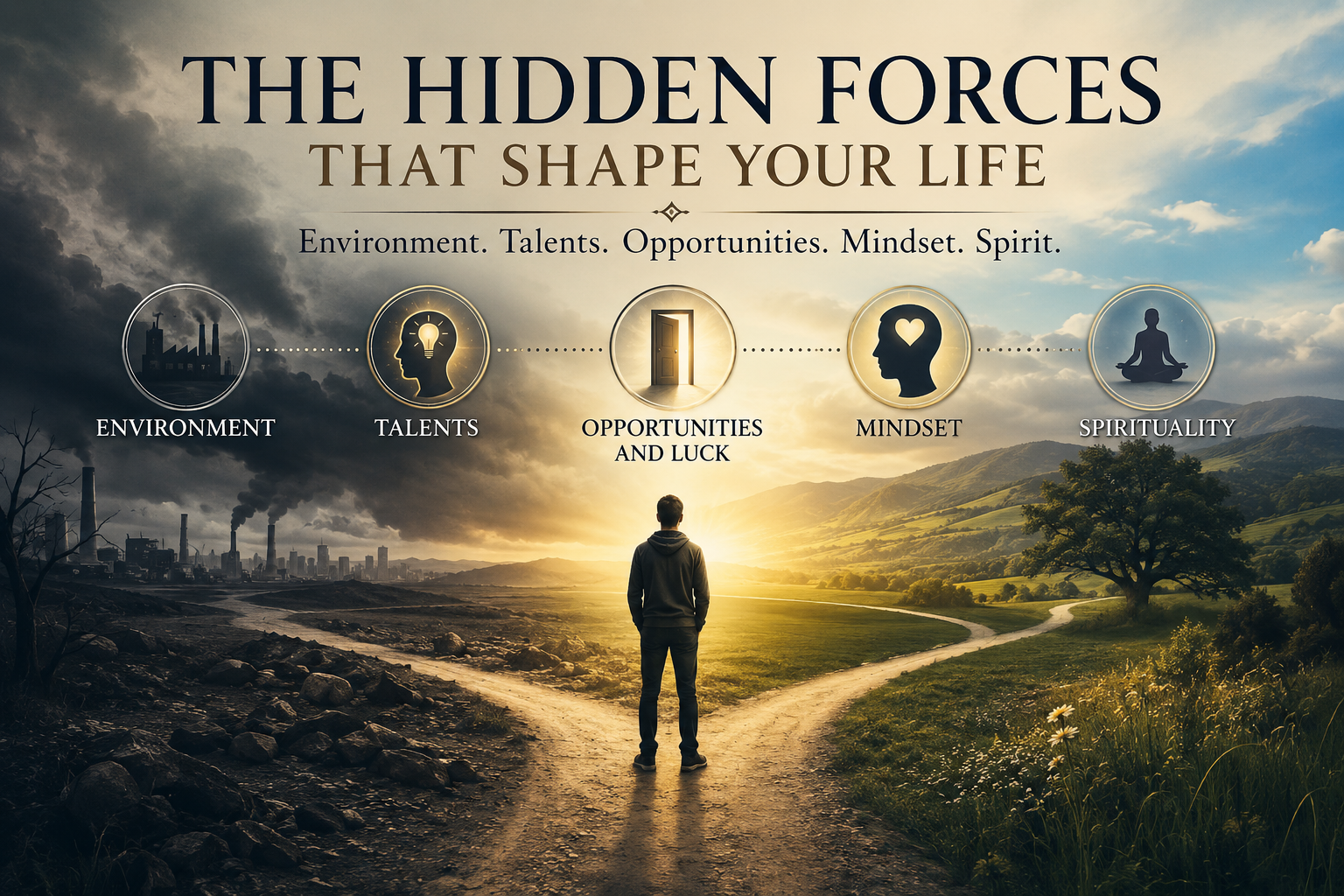
Well, some of the dots we don’t often really think about, but they influence our lives to varying degrees. too. (These are not listed in any order because each will affect one’s life differently and to varying degrees). Things like our archetypes, personality traits, beliefs (religious beliefs, prejudices, myths, etc.), our talents, temperament, environment, artifacts, opportunities, luck, and Zen (or lack of Zen) are all integral parts of who we are, and
Note: None of these dots are about money.
One by one we’ll look at these dots and how they connect to our lives, don’t worry I’ll tie them together, and if you keep a record of what ’dots’ seem to resonate more to you, those need to be highlighted because there may be some or many connections that have not really been explored yet. Each of these are guideposts to who we are and where we are going in our lives. Perhaps that is because, while there is a path destined for each of us, we have free will to follow it or to deviate from that path. Will looking at each ‘dot’ tell us more about who we are or why it may be relevant? That’s going to depend on how much or little each dot is relevant in their lives.
We talked a little about that first dot mentioned, archetypes. While you may or may not see a connection yet to your present life, somewhere inside you there is a recurring story that resonates—you might find yourself dreaming about something again and again, or you remember a character from a favorite children’s book or television show, and then you might think about what it was that made you remember it. Too often things float in and out of our minds and they are dismissed at random. You will tire of me saying this, but you need to write them down—right now before you forget about them, and you might also write down the date to chronicle it.
So, now, let’ explore the next ‘dot.’ I mentioned personality traits. (And again, remember, these dots were listed in no particular order of priorities).
Personality Traits
When you are born you inherit certain traits from your parents and ancestors, such as height, weight, complexion, and hair color. But there are personality traits which may or may not be attributable to them. You may notice that you have traits that remind you of another family member, such as getting annoyed easily, or a tendency to avoid social settings. Perhaps you find yourself automatically responding to situations without really thinking about why. While we do many things out of habit, if we start asking ourselves why we do it that way, or why we react in certain ways, we may begin to discover more about ourselves. If we listen to what others say to us, how they say it and how we react, we can begin to understand our personality much better. Often employers will ask applicants to take personality tests, then assess their personality and how well they would fit in with other employees or not.
In fact, as long as 1,200-1,600 years ago Greek physician Hippocrates (c. 460 – c. 370 BC) described the four temperaments as part of the ancient medical concept of humourism, which purports that four bodily fluids affect human personality traits and behaviors[1]:
-Sanguine: This personality type is easy going, lively, optimistic, and averse to fighting. They also have a high tolerance for risk and are generally persistent. (The Greeks associated this type with blood.)
–Phlegmatic: This personality type is loyal and responsive but not desirous of getting lots of attention but tends to aggressiveness whenever possible, preferring a quieter approach. They make it a point to preserve their relationships with old friends and family. People with Phlegmatic temperaments tend to avoid conflict and usually try to mediate with others for peaceful resolutions. (The Greeks associated this type with phlegm.)
-Choleric: Choleric temperament personalities are typically extroverted and energetic — they are usually decisive, makingquick decisions, are visionary and driven, usually assuming leadership, taking charge with directness and assertiveness. They can also be hot headed and impatient and are driven and highly effective, (The Greeks associated this type with yellow bile–. greenish-yellow fluids made by the liver and stored in the gallbladder. Itemulsifies fat so digestive enzymes can absorb them efficiently and help incholesterol breakdown).
Melancholic: The melancholy personality: Greeks believed their humor to be cold and dry. An excess of black bile was thought to cause melancholy, sadness and imbalances in these humors could lead to both physical and mental illnesses.) Today a number of personality traits include these basic premises. If you find you have some of the traits of one of these types, or if you find yourself reacting similarly to one of them, make note of it. This may be a predominant way you approach and respond to events in your life, so it is worth thinking about as you navigate your daily life. (The Greeks associated this type with black bile. Black bile is the sediment of normal blood.. responsible for building bones and teeth and is essential for health. Imbalance can cause various diseases.)
Beliefs
In researching when humans began embracing beliefs in some kind of a Higher Power, artifacts have been found dating several hundred thousand years ago[2] Archeologists and paleo archeologists[3] (or paleoarcheology) focuses on hominin fossils ranging from around 7,000,000 to 10,000 years ago, and human evolution and the ways in which humans have adapted to their environment in the past few million years).It seems that Homo heidelbergensis, Homo antecessor, and Homo erectus ( predecessors of Neanderthals), seemed to create idols and offering bowls to god effigies of the weather, the earth, the sun to help in their hunting, and for protection from enemies and predators. Through history humans desire to worship something higher grew, over time condensing multiple gods to one God and then splitting into various versions of more formal religions. While most gravitated to one religion (Christianity, Islam, Buddhism, Taoism, Confucianism, Judaism, Baháʼí, Mormon, and others),
There are others who did not have any formal belief system, and may even vehemently profess to be anti-religion or atheist,, but still there are some who allude to ‘a universal consciousness’; or some different type of quantum process to describe the galaxy, the universe, all animate and inanimate creatures, including each human’s existence
Depending on who’s describing it, anthropologists, scientists, philosophers, even physicists, and how they frame it, they converge on the same basic claim: consciousness isn’t something the universe accidentally produced. Physicist David Bohm proposed ”a hidden layer of reality from which the visible universe unfolds. Werner Heisenberg described that state as “potentia.”
But some of the very people who claim to be religious skeptics reserve private beliefs in cultural customs, some keep charms, certain objects ‘for good luck’, and observe certain superstitions like, ’knocking on wood for good luck,’ avoiding black cats, or fearing bad luck on Friday the 13th. While not religious beliefs per se, these still reflect a reference to something ‘other’ or ‘higher.’
In the end, whatever belief or nonbelief we hold is a part of us. That is why our belief, or nonbelief system needs to be acknowledged as one of the component ‘dots’ that comprise who we are.
We now have three dots—so be sure to write them down and spend a little time thinking about each might affect and to what degree, Each influences you to a degree—think about that too.
Alas, I promised I would talk about all the ‘dots’… I mentioned and I’ve only talked about three–but that is because there are more to come in future blogs. Also, remember, at some point, we still need to gather and ‘connect’ all the dots. So, there is much more to come. ‘Stay tuned.’
References:
Four Temperaments.. https://psychologia.co/four-temperaments/#temperaments-overview
Archeology. Http://archeology.org\
Universal Consciousness.https://scienceinsights.org/what-is-universal-consciousness-philosophy-to-physics/